Tuesday, May 17, 2016

Blog C: Plastic Activism

It is evident in today’s society that we are more educated in the effects of Plastic and aware of how it has altered our environment. In response to this, many initiatives from around the world are cultivating various solutions in order to reduce and reverse the situation we have today and also for the future.

The Seabin Project is an innovative ocean cleaning technology created by Perth duo Andrew Turton and Pete Ceglinski with a direct aim to “solve, educate and prevent our ocean’s pollution problems” (Indiegogo 2015). Their concept is an automated rubbish bin for floating docks that aims to reduce contamination by collecting debris from the water. “Built from recycled materials, the Seabin is fixed to a dock with water pump running on shore power. The pump creates a flow of water that sucks all floating rubbish...into a natural fibre bag, before pumping the water back out. It catches everything from plastic bottles to paper, oils, fuels and detergent”. The Seabin is a fantastic solution for the present, with factors including: low cost, low maintenance, works 24/7 and is effective in reducing the implications of Plastic and waste.

The Seabin in action (The Seabin Project 2015)

Raw for the Ocean is a fashion collaboration brand between G-Star Raw, Bionic Yarn and Parley in creating denim from recycled plastic. Combining science, activism and fashion; the alliance creates seasonal collections utilising Bionic yarn, which is a high quality yarn derived from recycled bottles in order to “weave the way to cleaner shores” (G-Star RAW 2015). Creatively directed by renowned musician Pharrell Williams and accompanied also with a documentary created by i-D magazine, the film raises awareness on how Plastic has affected our oceans globally and how this is an “opportunity to solve this problem rather than giving up hope” (Youtube 2015). This initiative drives the fashion industry to be more involved in environmental issues and brings immense awareness to it’s consumer with such high profile identities partnering on this project.

Raw for the Oceans 2016 campaign image with Pharrell Williams (G-Star RAW 2016)

Precious Plastic is a concept created by Dutch designer Dave Hakkens for his university graduation show in 2013. His notion is to “turn plastic waste into something valuable” (Youtube 2016) by designing machines which enable people from around the world to work with plastic and transform it into something new from functional tools to decorative ideas. He offers free downloadable packages which include blueprints for the machinery, further information about Plastic and has created this concept to be easily buildable as well as customisable in any corner of the world. Precious Plastic has already spread awareness 228 countries across the world, where individuals are participating in “boosting plastic recycling” and utilising the waste we have lying around.
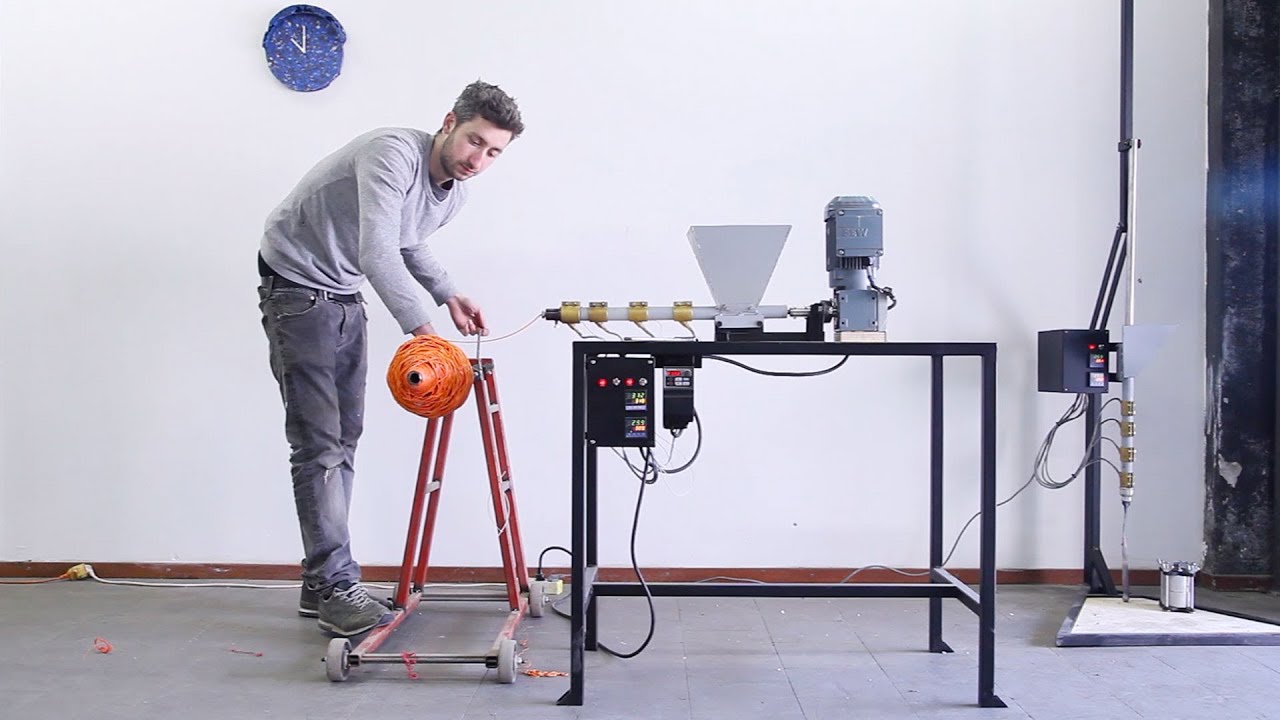
Dave Hakkens using his Precious Plastic invention (Youtube 2016)

References:

Gartry, A. 2015, ‘Seabin’ designed by Australian surfers to clean up marinas, reduce ocean pollution’, ABC News, 21 December 2015, viewed 15 May 2016, <http://www.abc.net.au/news/2015-12-20/seabin-designed-by-australian-surfers-to-start-cleaning-up-ocean/7044174>

G-Star RAW 2015, Raw for the Oceans, viewed 16 May 2016, <http://rawfortheoceans.g-star.com/#>

G-Star RAW 2016, ‘G-STAR RAW X PHARRELL “WTF ARE YOU DOING TO MY OCEANS?”’, The Source, viewed 15 May 2016, <http://thesource.com/2016/02/26/g-star-raw-x-pharrell-wtf-are-you-doing-to-my-oceans/>

Indiegogo 2015, Seabin Project: Cleaning the oceans one marina at a time, viewed 15 May 2016, <https://www.indiegogo.com/projects/cleaning-the-oceans-one-marina-at-a-time#/>

Precious Plastic 2016, viewed 16 May 2016, <http://preciousplastic.com/en/>

The Seabin Project 2015, ‘Floating Seabin trash collector could rid the oceans of plastic waste’, Inhabitant, viewed 15 May 2016, <http://assets.inhabitat.com/wp-content/blogs.dir/1/files/2015/12/The-Seabin-Project-1-1020x610.jpg>

Youtube 2015, The Plastic Age: A Documentary feat. Pharrell Williams, videorecording, Youtube, viewed 16 May 2016, <https://www.youtube.com/watch?v=Pt6KlPCX1BU>

Youtube 2016, Precious Plastic - At Work Thumbnail, Youtube, viewed 15 May 2016 <https://i.ytimg.com/vi/76AFNIxYjUE/maxresdefault.jpg>

Youtube 2016, Precious Plastic - Promo, videorecording, Youtube, viewed 16 May 2016, <https://www.youtube.com/watch?v=8J7JZcsoHyA>

Blog B: Plastic Invisibility

Plastic’s seamless integration into society has left the modern day environment riddled in synthetic polymers in everyday tasks and actions, from the waste littered ashore to the packaging that decorate the supermarket aisles. We don’t seem to value Plastic highly at all, due to it’s association with mass production and it’s easy accessibility due to advances throughout history. “These days, our lifestyles are sustained by plastics...We tend to ignore or forget about plastics yet they are literally everywhere” (Tonkinwise 2004).

Plastic covered fruit and vegetables in a Japanese store (Getty 2015)

With such an ingrained presence in society, it’s difficult to refocus back onto plastic due to it’s  constant transforming aesthetic. Mankind has become so susceptible to perceiving it as an indestructible yet easily disposable material. In both it’s transparent and opaque form, Plastic simply does the job of presenting the product to the consumer without hindering their path to the object. This can be perceived in it’s ability to appear to the consumer in varying thickness, opacity, consistency - all components that are easily changeable due to the low manufacturing costs of producing Plastic. “We don’t think about the material, because there is nothing about a plastic’s materiality that draws attention to itself” (Tonkinwise 2004)

Home built of plastic bottles in Panama (Plastic Bottle Village 2015)

Plastic’s non-invasive demeanour allows it to slip into the cracks of our daily lives, with it’s lack of smell and it’s inability to rub off on anything else. The synthetic form is able to move from both sides of the spectrum, rendering it both an impermeable object as well as invisible one also.

“We nonetheless often assume that plastics are almost indestructible” (Tonkinwise 2004) due to it’s ability to reshape and reform for a new function. This notion can be seen in both positive and negative perspectives, where it takes an impossibly long time for the matter to decompose yet on the other hand allows us to really utilise the material and recycle it for other situations. Reflecting on how we have arrived to The Plastic Age that is modern society today, and how we decide what to do next will really impact on our perception of Plastic, and possibly with further awareness and ambition - we will all be able to open our eyes and see the plastic in front of us.

Emma Watson at the 2016 Met Gala wearing a dress made out of plastic bottles (Getty 2016)


References:

Getty 2015, 'How hard can it be to remove all plastic from your supermarket shop? You might be surprised’, The Spectator, viewed 15 May 2016 <http://cdn2.spectator.co.uk/files/2015/10/vegetables-supermarket.jpg>

Getty 2016, ‘Emma Watson’s Met Gala 2016 Dress Was Made Out Of Recycled Plastic Bottles’, US Weekly, viewed 15 May 2016 <http://www.usmagazine.com/celebrity-style/news/emma-watsons-met-gala-2016-dress-was-made-from-plastic-bottles-w205117>

Plastic Bottle Village 2015, The Village Eco-Community, viewed 15 May 2016 <http://static1.squarespace.com/static/5674704dc647ad126efd8fe1/t/56e4c0c04d088e29141fdfde/1457832150638/?format=750w>

Tonkinwise, C. 2004, ‘Everywhere and Nowhere: An Introduction to Plastics’, Change Design, viewed 15 May 2016 <http://www.changedesign.org/Resources/EDFPublications/Articles/Papers/Plastic1.htm>

Blog A: Plastic Facts

Plastic has evolved drastically since its initial introduction into today’s global environment. Originally derived from natural polymers, it was experimented and mixed with synthetic polymers and eventually assimilated into the synthetic formulations that people interact with today. Gradual advancements and significant events has allowed the relationship between material and consumer to grow quickly; from the revolutionary discovery of Bakelite in 1907; the emergence of new plastics developed for World War II; to its malleable design with the Panton chair in 1960. “The amount of plastic the world consumes annually has steadily risen over the past seventy years...We became plastic people really just in the space of a single generation.” (Freinkel 2011). Our reliance and involvement in Australia is also iterated by Freinkel, “The average Australian consumes half as much as plastic as Americans - about 150 pounds a year” (Freinkel 2011)

The Panton Chair by Verner Panton (Panton 1960)

Plastic has managed to assimilate itself into everyday interactions in various forms: from the humble plastic bag at the supermarket, the fibres which comprise of one’s clothing, to the mode of transportation we take from day to day. It’s malleability and versatility is derived from the construction of its atom chain structure and by varying this it dictates the flexibility and durability of the plastic. Since introduced, it has been an integral material that has led society to where it is today, with influence encompassing transportation, entertainment, communication, shelter, packaging purposes, etc. On the other hand, the saturation of plastic has left a detrimental mark on the environment where growing concerns of degradability and sustainable initiatives are prominent in society today aimed at reversing the effects of synthetic polymers.

Plastic raincoats on the runway for Valentino Spring/Summer 2013 (Valentino 2013)

Before plastic involvement, people utilised natural materials for everyday tasks. Items such as wood, clay and bone were utilised prior to plastic but were susceptible to deterioration and fragility. However, as society grew and demand for product increased exponentially, it became more difficult for manufacturers to maintain as natural resources couldn’t keep up with the production pace. The discovery of white celluloid, the first synthetic polymer, in 1869 by John Wesley Hyatt solved his problem of acquiring an appropriate substitute for ivory in order to fulfill the growing popularity of billiards. As a result, he was able to replicate the billiards for a fraction of the cost, and meet the demands of his customers. This move also aided in the process of the economy progressing into the industrial revolution. “Plastics heralded a new era of material freedom, liberation from nature’s stinginess” (Freinkel 2011). Today, plastic is heavily inserted into our day to day lives. However our opinion on the material has changed from desire to disdain, and focuses on reversing the environmental effects and discovering sustainable materials to hopefully replace the impermeability of Plastic.

Hyatt celluloid billiard balls (Albany Institute, n.d.)

References:

Albany Institute, n.d., Hyatt Billiard Balls, viewed 16 May 2016, <http://www.albanyinstitute.org/details/items/hyatt-billiard-balls.1673.html>

Frienkel, S. 2011, Plastic: A Toxic Love Story, electronic book, Houghton Mifflin Harcourt, Boston.

Panton, V. 1960, Panton Chair by Vitra, Danish Design Store, viewed 16 May 2016, <http://www.danishdesignstore.com/products/verner-panton-chair-vitra>

Valentino 2013, Spring/Summer Collection, viewed 16 May 2016, <http://www.reginele.ro/wp-content/uploads/2015/09/valentinto-clear-plastic-raincoat.jpg>